About WeYone University
The purpose of WeYone University in Sierra Leone is to expand access to quality higher education and develop skilled professionals in Commerce, Science and Technology fields that support national and international development.
The name “WeYone” means “ours” in Krio, reflecting the goal of building an institution by Sierra Leoneans for Sierra Leoneans to drive change and development.
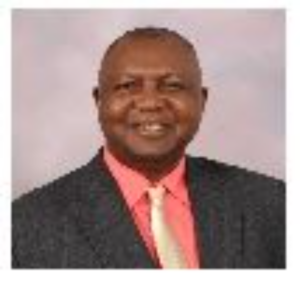
Professor Mohamed K. Kamara
Found and CEO of Weyone University
We are here to:
- • Provide affordable, high-quality education to students in Sierra Leone.
- • Offer flexible learning options including online and in-person programs.
- • Develop Skilled Professionals
- • Train students in Science, Engineering, cybersecurity, artificial intelligence, mathematics, business, and marketing.
- • Prepare graduates for careers in high-demand industries.
- • Promote Innovation and Technology
- • Focus on innovation in science, technology, and commerce to support national development
- • Provide Globally Campus Recognized and Qualifications
- • Partner with international institutions such as University of Potomac in Washington, DC to offer globally recognized degrees and certifications.
- • Empower Sierra Leonean Students
Turning Knowledge into Opportunity
Graduates Ready for the Global Market
Professor Mohamed K. Kamara
Founder and CEO
Professor Mohamed K. Kamara is a lifelong learner, accomplished author of three books, and a principal technocrat in Computer Science. He wants to inspire future education leaders with the Primary Leadership Academy. Dr. Kamara earned his Ph.D. degree in Information Technology Security and Assurance from George Mason University(coursework) and Walden University (dissertation research work) in 2013, MSc. honor's degree in Computer Science and Network Technology from Strayer University in 2004 and BSc. honor's degree from Stavanger University – Norway) in Telecommunications Engineering in 1993. He also earned a number of diplomas in electronics, software engineering, computer hardware technology and networking from respectable poly-technique institutions.
Dr. Kamara has over 20 years of teaching experience, both on campus and online with undergraduate and graduate courses in Computer Science, Cyber Security, Information Technology and Mathematics. He is currently an adjunct professor in Computer Science and Math at Webster University since 2017, the University of District of Columbia since 2018, and a full-time professor at the University of the Potomac since 2018.
Dr. Kamara was an adjunct professor in Computer Science, Cybersecurity, and Math at Webster University from 2015 to 2022, the University of District of Columbia from 2022 to 2025, and at the Stratford University graduate school of Computer and Information Sciences from 2006 to 2015. He developed the Stratford University graduate curriculum in telecommunications. He was the Dean of academics for computer science undergraduate at the American College of Commerce and Technology from 2009 to 2017. He became the head of curriculum development, the University Research Reviewer (URR), Chairman of the graduate council, and presided over the accreditation committee for Accreditation Board for Engineering and Technology (ABET)
In addition to his teaching experience, Dr. Kamara has several years of professional hands-on field work experience in the IT industry. He worked in all levels of IT from help desk, network administration and security coordinator to Project Management. He has a deep knowledge and hands-on experience in researching, developing, analyzing and implementing new software modules using Java and hardware design.
Two awards for community building in higher education
- 1) The Implications of Internet Usage in Sierra Leone – 2013
2) The impacts of Cognitive Theory on Human and Computer Science Development – 2016
3) Securing Critical Infrastructures – 2020
Wireless and Cloud Computing Dependability and Reliability Security Crises.
- Analysis involves the use of Mathematical Modeling, Discrete, Complex Analysis, MATLAB and Java Software Module tools
Construct a diversified, inclusive, vibrant, transformative, and transitive classroom community where students take the classroom leadership role.